Mission Statement –The establishment of the CREIA Energy Assessments (CEA) program represents a significant step forward in California’s commitment to energy efficiency and sustainability. By adhering to CREIA principles of professionalism, independence, and objectivity, the CEA program ensures that homeowners receive reliable assessments that serve their best interests. This initiative is poised to foster a thriving energy assessment industry in California, benefitting homeowners, professionals, and the environment alike.
Residential Energy Assessment Overview
Energy assessments are crucial because outdated building standards and lack of proper trade education lead homeowners to make poor decisions without reliable advice.
The assessment focuses on understanding homeowners’ needs. Energy Assessments include education, an informative narrative identifying conditions, and recommendations. The report highlights recommendations regarding effectiveness and costs.
This assessment can be completed in a timely and affordable manner. The field assessment typically takes one hour with a summary discussion and a report. Follow-up consultations are available.
One key advantage of an energy assessment is that it is conducted by an independent, objective professional who exclusively advises in the homeowner’s best interests.
An energy assessment should be incorporated into each home purchase, renovation project, and before to any HVAC upgrade or solar installation.
Energy Assessment Curriculum
The energy assessment courseware is divided into two training modules: Fundamentals for Energy Assessments and the Energy Assessment Protocol.
Fundamentals
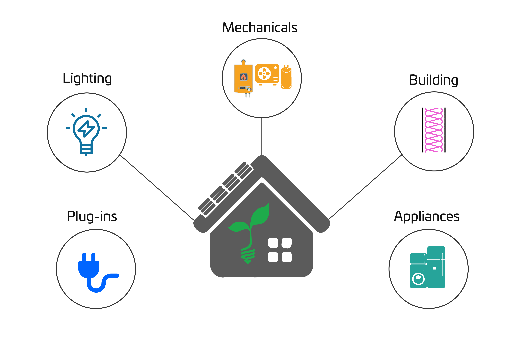
The fundamentals of an energy assessment delivers the foundation of core concepts necessary to understand, interpret, convey conditions, and offer recommendations for an energy assessment. This residential energy assessment evaluates all the building components for a complete energy assessment.
The Fundamentals also include an overview of the energy assessment marketplace.
Energy Assessment Protocol
The energy assessment protocol sets standards to ensure physical assessments and reporting consistency. It was developed based on over a decade of consumer feedback and needs. This protocol aims to provide information in plain language that homeowners can easily understand. It begins with an Impact section explaining the specific condition’s purpose. Sections on Type, Assessment, and Recommendation follow this. A separate workbook was created for the Energy Assessment Protocol.
Energy Assessment Fundamentals
Developing courseware for residential energy assessments involves creating educational materials that address various topics crucial for understanding and enhancing home energy efficiency. The courseware includes:
Fundamentals of Building Science: Understanding the principles of heat, air, and moisture flow and how they affect a home’s energy performance.
House-As-a-System: Explains the inter-relationship and interdependencies of building components that affect comfort issues, energy efficiency, and health & safety.
California Energy Codes: Prove an overview of California’s regulations and standards that govern residential energy use and efficiency.
ASHRAE Standards: Knowledge of the American Society of Heating, Refrigerating, and Air-Conditioning Engineers standards provides guidelines for comfortable, energy-efficient indoor environments. This section focuses on air filtration for consumption, exhaust, moisture, energy efficiency, temperature control, and indoor air quality.
Passive House Standards: Learn about this rigorous standard for maximum energy efficiency in a dwelling while reducing ecological footprint.
Energy Assessment Protocol
The primary areas of focus for energy assessments include energy efficiency, comfort conditions, and associated health and safety considerations.
The energy assessment protocol sets standards to ensure consistency in physical assessments and reporting. It was developed based on over a decade of consumer feedback and needs. This protocol aims to provide information in plain language that homeowners can easily understand. It begins with an Impact, Type, Assessment, and Recommendations.
Impact – Provide consumer-focused information on each building component and details specific to energy efficiency (EE), comfort (CMFT), and health & safety (H&S).
Type – Describe the building component. HVAC and water heater will include capacity, fuel source, efficiency ratings, brand, and model #.
Assessment – Describe the qualitative condition of the component, including age and efficiency.
Recommendation – Offer recommendations as necessary. Based on impact and cost-effectiveness, recommendations will range from Good to OK or improvements.
Resources
This section includes abundant resources to build and fortify knowledge for energy assessments. These resources have been carefully curated to update and develop knowledge to support energy assessments. Energy Assessors, trade professionals, and homeowners are encouraged to review these informative resources, which should be regularly monitored as programs and ordinances change. These resources include ongoing training offered free of charge by primary utilities throughout California. Other resources include key websites related to energy building codes and programs, including incentives. Several leading renowned experts offer in-depth knowledge related to energy assessment, home performance, and sustainability through ongoing videos on YouTube.
Training
Class
For more Information & Registration
SoCal Ed
Online, On Demand, In-person training portal. Training centers in Irwindale and Tulare, CA.
The CEC’s responsibilities include promoting energy efficiency, developing renewable energy, transforming transportation, investing in energy innovation, and ensuring a reliable energy supply while addressing emergencies.
The US Govt Executive Branch Agency oversees energy policy, including research, environmental issues, and more. The website has references to nationwide building and appliance standards and tax rebates.